ServicesWindow Replacement
Window Replacement in Lone Oak
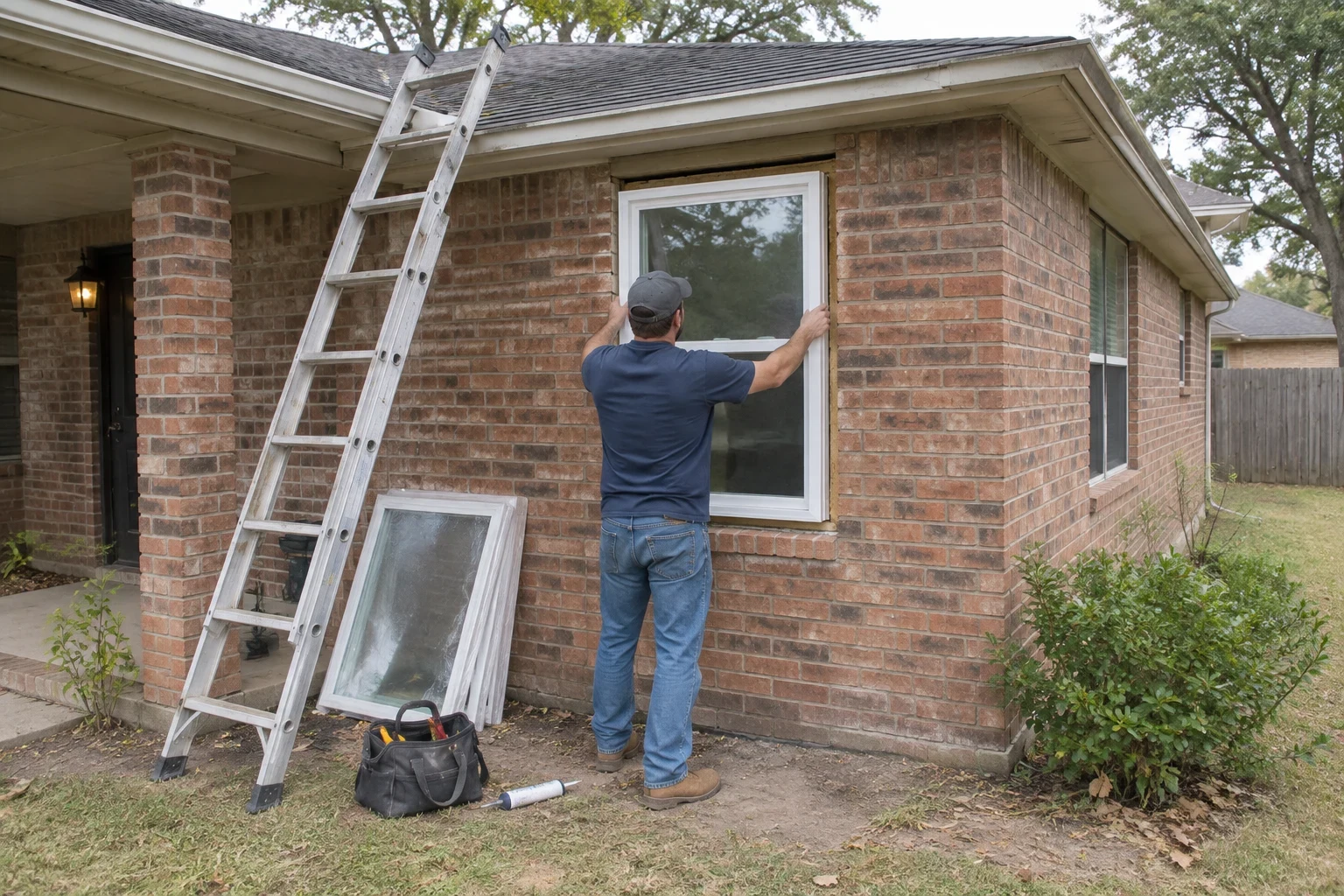
We replace worn, drafty and fogged windows with units chosen on how long they last and what they cost to live with. We compare frame materials, glass packages and install methods side by side, so the window you pick still makes sense in fifteen years.
When Replacing Beats Living With It
Most windows wear out at the same few points: the seal on the insulated glass unit, the balances that carry the sash, the weatherstripping and the frame. A broken glass seal is the clearest marker. The argon between the panes leaks out, humid air seeps in, and no amount of cleaning will clear it. At that stage, replacing the window is usually the sound decision.
What you pay at purchase is only part of what a window costs you. A budget frame that warps, chalks or needs fresh paint every few years can end up costing more than a better unit that stays square and sealed. The glass counts just as much. Through long, hot Texas summers, a low-E coating built to block solar heat gain is working every hour your AC runs.
At the consultation we measure each opening, check the frames and sills for rot or movement, and walk you through two or three options with their tradeoffs in plain terms. You get your quote by phone or in person, itemized by window.
What Our Window Replacement Covers
- Measurements at every opening
- Older openings are seldom square, so we take width and height at three spots each. Those readings tell us whether an insert or a full-frame unit will fit right.
- Side-by-side frame and glass choices
- We show vinyl and fiberglass frames along with double-pane glass that has low-E coatings, argon fill and warm-edge spacers. For each one we cover lifespan, upkeep and heat performance.
- Tear-out and opening prep
- We take out the old sashes, stops and hardware with care, then inspect the sill and rough opening for soft wood or water damage before setting anything new.
- Sealing, flashing and insulating
- Each unit is set level and plumb, shimmed where it needs support, and the gaps are filled with low-expansion foam. We seal the outside joints so wind-blown rain can't get into the wall.
- Lead-safe practices for older houses
- Our crew is Lead certified, which counts in homes built before 1978 where old frames may carry lead paint. We keep dust contained, cover floors and clean up with lead-safe methods.
- Finish trim and cleanup
- We finish and caulk the inside and outside trim, haul off the old windows and vacuum the work area before we go.
How to Tell Your Windows Need Replacing
Haze inside the glass
Moisture or cloudiness caught between double panes means the edge seal has failed. Once the argon is gone, the window insulates only a little better than one pane.
Sashes that slide down or jam
When a window won't stay up or catches in its track, the balances are often worn or the frame has moved. Parts for older units may be out of production.
Drafty, overheated rooms
Air at the sash, or a room by the window that runs hot in summer, means heat is coming through the glass and gaps. Your air conditioner covers that cost daily.
Old single-pane aluminum
Aluminum carries heat and cold right through its frame, and the single glass does little to stop it. Replacing these often gives homeowners the largest jump in comfort.
Water stains below the sill
Stained wood, bubbling paint or a sill that gives under your thumb means water is getting around the window. Ignored, it spreads rot into the studs and sheathing around the opening.
What Drives Your Price
What you pay depends on your home's openings and the products you choose for them. The quote prices every window on its own line, so an expensive casement or a full-frame install is never buried in a single total. If you would rather pay over time, we offer $0 Down on the whole project and 0% Financing options.
Frame material
Vinyl costs less at the start. Fiberglass is pricier, but it hardly grows or shrinks in heat, so its seals and corners usually stay tight longer.
Glass package
Low-E coatings, argon fill and triple-pane glass each raise the price. We tell you which ones pay back through lower cooling bills and which are tough to justify.
Install method
An insert or pocket unit fits inside your existing frame, which saves money when that frame is sound. Full-frame work goes back to the rough opening and costs more, but it is the right repair when the frame or sill has rotted or moved.
Size, style and count
Casements, picture windows and unusual shapes cost more than standard single- or double-hung windows. Upstairs openings and hard-to-reach spots take extra labor.
Lead-safe requirements
Homes built before 1978 may call for containment and lead-safe cleanup, which add time and materials.
How the Job Runs
- 1
A free visit to your home
We stop by, measure each opening and look over the frames and sills. Then we sit down with you and talk through the options and what each costs over time.
- 2
A quote itemized in writing
Your price is split out window by window, naming the product, glass package and install method for each. Any rot we find that needs fixing gets its own line, so nothing turns up later.
- 3
Order and install date
Your windows are made to the sizes we measured. Once they come in, we book an install day that suits you.
- 4
Install day
We cover the floors and furniture by each opening before starting. Openings are done one at a time: the old unit comes out and the new one is set, sealed and trimmed before we move on, so you never have several walls open together.
- 5
Checking it with you
Before leaving, we have you open each new sash and work every lock while we watch for sticking or gaps. We also show you where the U-factor and solar heat gain ratings are printed and how to keep tracks and weep holes clean.
Common Questions About Replacing Windows
Which is right for me, vinyl or fiberglass?
For most homes vinyl is good value and needs next to no care. Fiberglass is more expensive but shifts less as temperatures change, so seals and corners last longer. For a long stay in the house, fiberglass often wins over its lifetime. We show you both during the consultation.
Does every window need replacing at the same time?
No. Many homeowners work in stages, beginning with windows whose seals have failed or that take the worst afternoon sun, and doing the rest later. A bigger single project does tend to lower the labor cost per window. We can quote it both ways so you can compare.
How long is the install?
Expect a few hours per window, depending on insert or full-frame and what turns up under the old trim. A full house can take more than a day. Your quote includes a time estimate.
Should I worry about lead paint in my older home?
In homes built before 1978, paint on old frames and trim may contain lead. Our crew works lead-safe: plastic containment at each opening, removal that avoids sanding or shattering paint, and HEPA cleanup to keep dust out of your rooms.
Can new windows cut my energy bills?
In most cases, especially when they replace single-pane or aluminum-frame windows. How much depends on what you have now, the direction each faces and the glass you pick. We explain the U-factor and solar heat gain ratings so you can compare fairly.
Find Out What Your Windows Will Really Cost
We will measure your openings, check the frames and sills, and compare options by price and lifespan. The consultation is free and you are under no obligation.