ServicesPatio Doors
Patio Door Replacement in Lone Oak
We replace worn sliding and hinged patio doors with units built to stay square, seal tight and roll smoothly for years. Before you choose, we show you how each frame material and glass package compares on price, lifespan and upkeep, so the door makes sense long after installation.
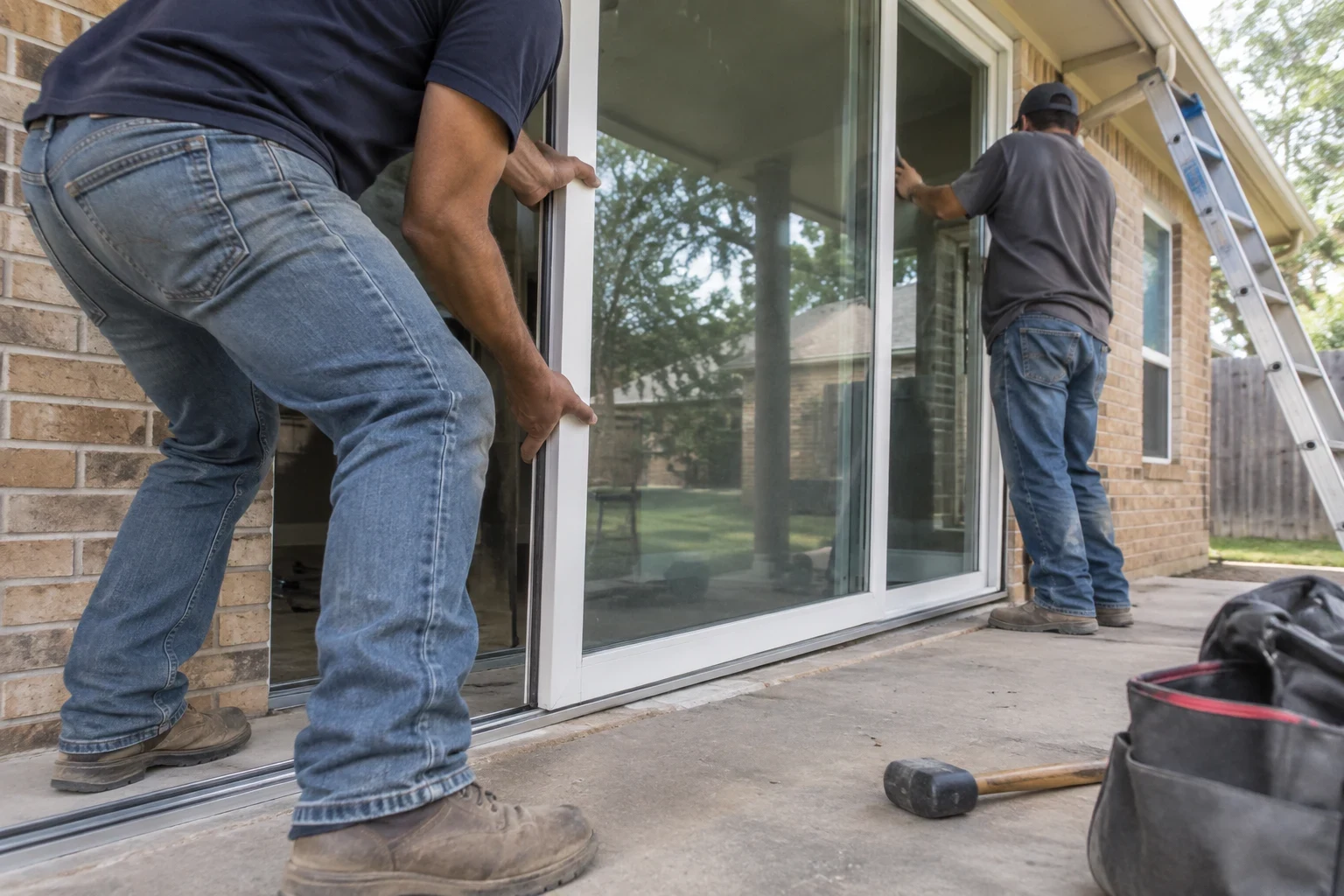
Why Replace the Whole Patio Door
No other opening in your home moves as much glass. A patio door hangs a heavy insulated glass unit on a pair of small rollers or a set of hinges, and it usually faces the yard that gets the hardest sun and rain. Once the frame twists out of square, the glass seal breaks down or water gets past the sill, the fault sits inside the unit, and a full replacement is typically the fix that lasts.
Price is only part of the comparison. An economy aluminum slider passes heat right through its frame, and its rollers grind down a soft track. A vinyl or fiberglass door with a thermal break, stainless rollers and Low-E glass costs more on day one but generally needs fewer adjustments and keeps its seal longer. We put those numbers next to each other so you can choose the door with the lowest cost across the years you expect to live there.
What Comes With Your Patio Door Job
Sliders or hinged doors
We put in two-panel and multi-panel sliders as well as hinged French-style doors. Since each needs its own clearance, we measure the swing space and look at furniture placement before you choose.
Choosing the frame
Vinyl, fiberglass and aluminum-clad frames each respond to heat in their own way. Fiberglass expands and contracts almost exactly like its glass, which puts less strain on the seals through hot summers and cold snaps.
The glass
Every patio door must have tempered safety glass by code, and that is what we use. We help you pick the Low-E coating and gas fill based on which way the opening faces.
Flashing and sill pan
We set a sloped pan below the threshold and lap it into the wall's weather barrier. That often-skipped step is what keeps rain from reaching your subfloor.
Insulating, trimming and hardware
The gap around the frame gets low-expansion foam instead of stuffed fiberglass. We then finish the inside and outside trim and install the handle set and locks you picked.
Removal and cleanup
The old panels, glass and frame go on our truck and leave your property with us. We vacuum the floor around the opening thoroughly before we pack up.
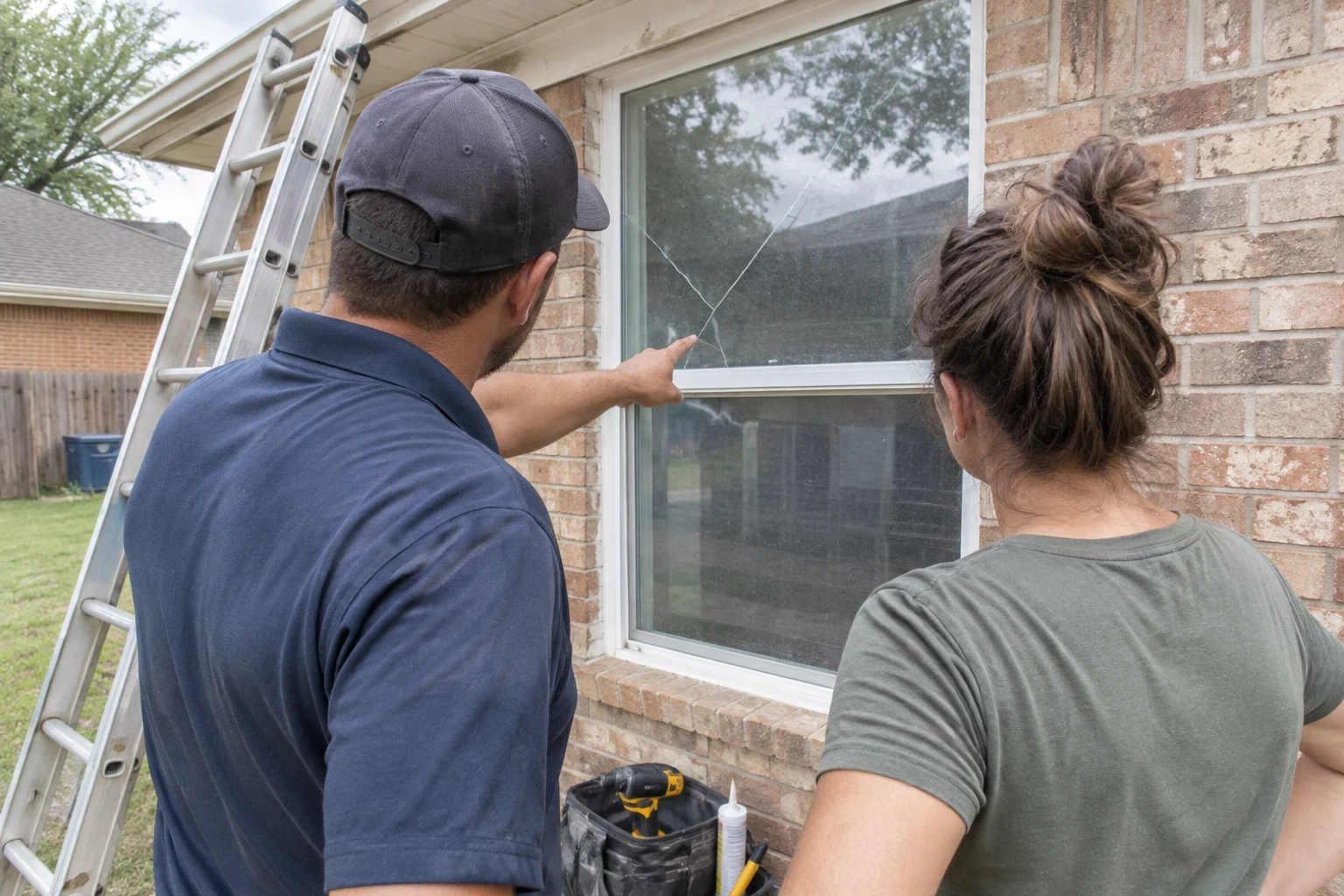
Signs It Is Time for a New Patio Door
- Cloudy glass you can't wipe clean
- Moisture or a milky film trapped inside the glass tells you the insulated unit's perimeter seal has broken. The insulating gas has escaped, and the door now performs about like single-pane glass.
- A door that drags or jumps the track
- Fresh rollers only help on a straight track. If the aluminum track is worn or dented, or the frame has shifted, it will keep wearing out rollers however often you replace them.
- Daylight where the panels meet
- A visible gap at the interlock means the weatherstripping has flattened or the panels have drifted out of line. Dust gets in through it, and your cooled or heated air slips out.
- Stains or a soft floor at the threshold
- Swollen baseboard, lifting flooring or a spongy spot just inside usually points to a sill installed without pan flashing. Every season it leaks, more subfloor has to be cut out and replaced.
- A lock that won't line up
- When the latch no longer meets its keeper, the frame has racked out of square. The expansive clay soil common around here can move a slab enough to cause it, and a new frame set plumb brings back both the seal and the security.
The Steps of a Patio Door Replacement
- 1
Measuring at your home
At your house we measure the rough opening, check the subfloor under the threshold and note the direction the door faces. Each option you see lists its price along with its lifespan and upkeep.
- 2
Placing the order
Every patio door is made to size. Before ordering, we go over the handing, color, glass and hardware with you so install day holds no changes.
- 3
Tear-out and inspection
We protect the floor, remove the old panels and frame, and inspect the framing and subfloor. If there is rot, we show you photos and explain the repair before any extra work starts.
- 4
Installing the new door
First the sill pan goes in. We set the frame level, plumb and square, shim it at the rollers or hinges, fasten, foam and flash it, then adjust the panels until they slide or swing evenly.
- 5
Walkthrough and cleanup
We walk you through the locks and track care, clear the debris and take the old door away.
What Sets the Price of a Patio Door
Most of the cost comes from the door's dimensions and the materials you pick. The rest depends on the framing and subfloor we uncover after the old unit comes out. Your estimate is written line by line, so you can see what each item costs and how many years of service it adds.
- Width, height and panel count
- Two panels in a standard opening is the least expensive layout. Three or four panels, or a hinged pair with a sidelite, raises the price, and extra height calls for thicker glass and heavier rollers or hinges.
- Frame material
- Vinyl keeps the up-front number lowest. Fiberglass and clad frames cost more, but they hold their shape and color longer, so you spend less on adjustments and refinishing later.
- Glass options
- Low-E coatings, argon gas and blinds sealed between the panes each add to the order. On an opening that bakes in afternoon sun, a stronger coating usually pays for itself in a cooler room.
- What we find in the opening
- Soft subfloor, rotted studs or a rough opening that needs widening add labor and lumber. We only price that work once we have seen it and shown you.
Common Patio Door Questions
- Slider or hinged French doors: which fits my room?
- A slider runs on its own track and takes no floor space, but its rollers wear with use. A hinged door closes against compression weatherstripping and often locks at multiple points for a tighter seal, yet it needs space to swing. We check your furniture and traffic path before we suggest one.
- Do you work differently in a house built before 1978?
- Possibly. Paint from that era may contain lead, and removing an old door frame disturbs the painted trim and casing. Since we are Lead certified, we seal off the work area and clean up with lead-safe methods when the home calls for it.
- Can the new door be wider than my current one?
- In many cases. It hinges on the header, the beam over the door that carries the wall and roof. We check it during the consultation and explain any framing changes before you choose.
- How much time does installation need?
- A standard opening usually takes one working day. Repairing a rotted sill or widening the opening can stretch that, and we tell you once we have inspected it.
- Is there financing for a patio door?
- There is. We offer $0 Down on the whole project and 0% Financing options, and we can explain both at your free in-person consultation.
Let's Measure Your Patio Door
We will look at the frame, the glass and the threshold, then walk you through options with cost, lifespan and upkeep side by side. The visit is free and there is no obligation.