How Much Does an 8 ft Sliding Patio Door Cost in Lone Oak?
The width is only the starting point; the frame, glass and what is hiding under the old sill decide most of the number.
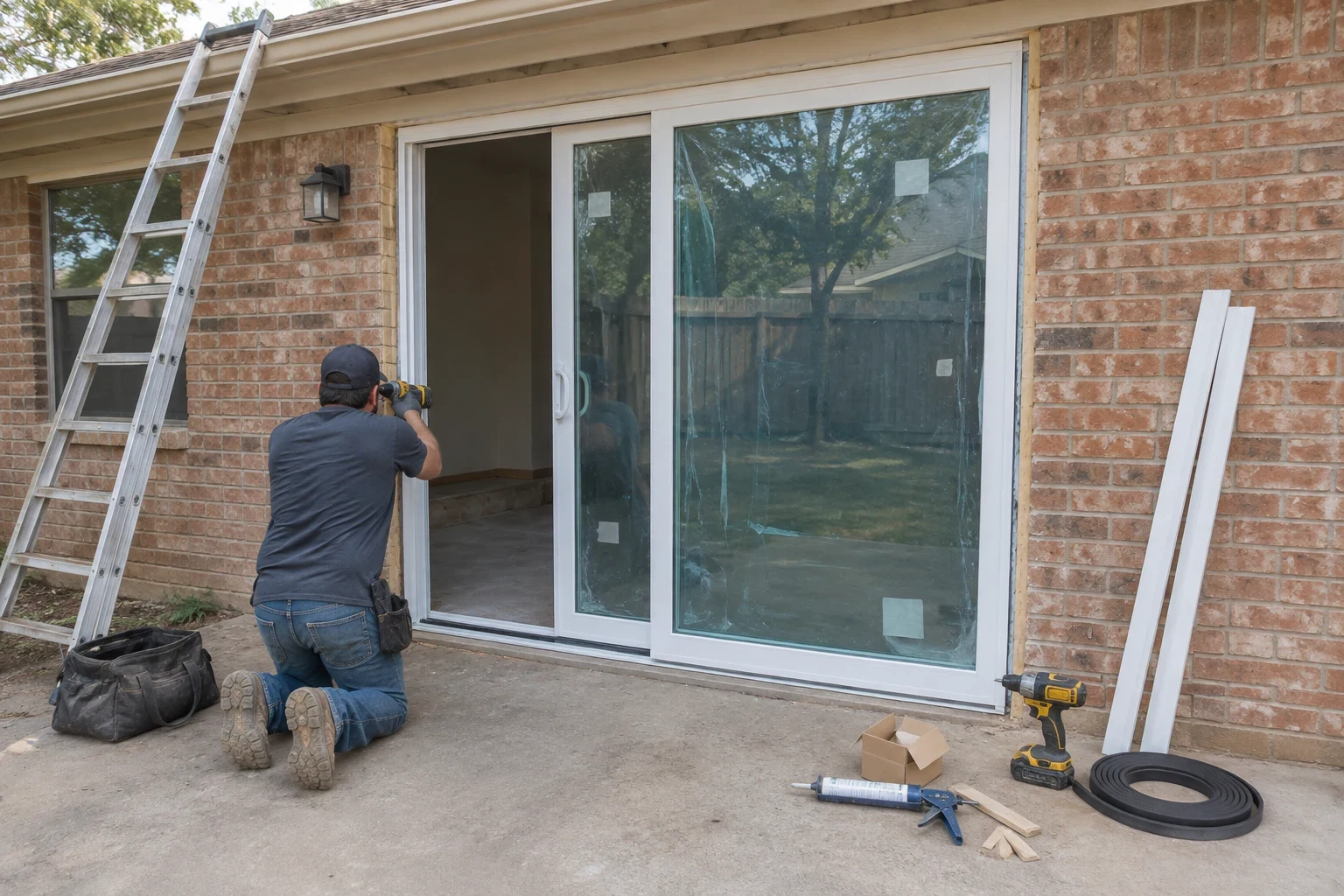
How much does an 8 ft sliding patio door cost?
The cost of an 8 ft sliding patio door depends mostly on frame material, glass package and the condition of the opening, not the width alone. Vinyl usually costs least up front, while fiberglass and clad wood cost more. A rotted subfloor or sill adds labor. A free in-person consultation gets you a written number: (903) 474-8674.
What does an 8 ft sliding door actually mean?
In most catalogs, an 8 ft sliding patio door is a unit about 96 inches wide. The standard height is 6 ft 8 in, and the common layout is two panels, one fixed and one that rolls. Those sizes are made in large runs, so they tend to cost less than a custom size.
Two details change that quickly. A door that is 8 ft tall instead of 6 ft 8 in uses bigger glass and a heavier panel, and it moves into a less common size. A three-panel layout across the same width adds a second sash, more rollers and more weatherstripping. Before comparing any numbers, make sure every quote describes the same width, height and panel count.
What drives the price of a sliding patio door?
Here are the parts and conditions that move the price, roughly in order of how much they matter.
- Frame material: vinyl, fiberglass, aluminum, or wood with an aluminum or vinyl exterior cladding.
- Glass package: doors require tempered safety glass by code. Low-E coatings, argon fill, triple panes or laminated glass each add cost.
- Rollers and hardware: stainless steel tandem rollers carry a heavy panel longer than single nylon wheels. Multipoint locks cost more than a single hook latch.
- The opening: rotted sill plates, soft subfloor or a sagging header all need to be fixed before the new frame goes in.
- Size changes: keeping the existing rough opening costs least. Widening it means a new header and more framing, and it may need a permit.
- Finish and color: dark exterior colors and interior wood finishes are usually upgrades.
Which frame material holds its value over time?
The cheapest door to buy is not always the cheapest door to own. Vinyl is the lowest up-front choice and needs no paint. It also expands more than other materials in heat, so on a west or south wall in a Texas summer, a long vinyl frame can bow slightly and make the panel drag. A reinforced vinyl frame in a light color limits that movement.
Fiberglass costs more but expands at close to the same rate as glass, so the seals stay tight through hot afternoons and cool nights. It can also be painted later. Aluminum is strong and slim, but it conducts heat unless the frame has a thermal break. Clad wood looks warm inside, and the interior wood needs finish care to hold up.
Spread the price over the years you plan to stay in your home. A door that keeps rolling smoothly and sealing well for twenty years often costs less per year than a cheaper one you are adjusting or replacing in ten.
What happens on installation day, and why does it affect cost?
Most 8 ft sliders go in within a single day. We take out the old panels and frame, then look closely at the sill and subfloor. Water that got past a failed sill seal often leaves soft plywood or rot that cannot be seen until the old door is out. That is the most common reason a final price differs from a rough guess, so we show you what we find before any extra work happens.
Next comes a sloped sill pan or flashing so water that gets under the threshold drains outside. The frame is set on shims, leveled and squared so the panel rolls evenly. Then the gaps are insulated and sealed and the rollers are adjusted. The expansive clay soils common in this part of Texas can shift a slab over time, and a frame set dead square has more room to handle that movement before the panel starts to bind. Interior trim, exterior sealant and hauling off the old door finish the job.
How should you compare quotes for a patio door?
Ask for each quote in writing with the parts listed separately: the door unit, glass specs, removal, sill and subfloor work, trim and disposal. Check the NFRC label numbers. U-factor shows how well the door holds back heat, and a low solar heat gain coefficient matters most on doors that face afternoon sun.
If the upfront amount is the sticking point, ask about payment. We offer 0% Financing options, which can make a longer-lasting frame or better glass easier to choose now instead of settling for the cheapest unit.
More questions about sliding patio door costs
Is a sliding door cheaper than a hinged French door of the same width?
Usually, yes. A slider has one moving panel on a track and simpler hardware. A French door needs hinges, an astragal and a lockset on panels that swing, and it needs floor space to open.
Can I replace a 6 ft slider with an 8 ft one?
Often you can, but the wall opening has to be widened and a longer header installed to carry the load above it. That framing work, plus drywall and exterior patching, adds to the cost and may require a permit.
How do I know if my current door needs replacing rather than new rollers?
Look for fog between the glass panes, a frame that is out of square, or water stains and soft flooring near the sill. Any of those point to a door that has reached the end of its useful life, and we can look at it during a consultation.
Will a new door lower my cooling bills?
An 8 ft slider is a large sheet of glass, so a low-E, argon-filled unit with tight weatherstripping usually cuts heat gain noticeably compared with an older clear-glass door. How much you save depends on which way the door faces and how much shade it gets.
Get a written number for your patio door
We measure the opening, check the sill and subfloor, and walk you through frame and glass options with their upkeep, all at no charge. You get a clear price to compare before you decide anything.